Industry
Zero-Downtime Deployments: What DevOps Actually Buys a Growing Business
DevOps isn’t a job title you hire once you’re "big enough." Here’s what it actually prevents — and what it costs to skip.
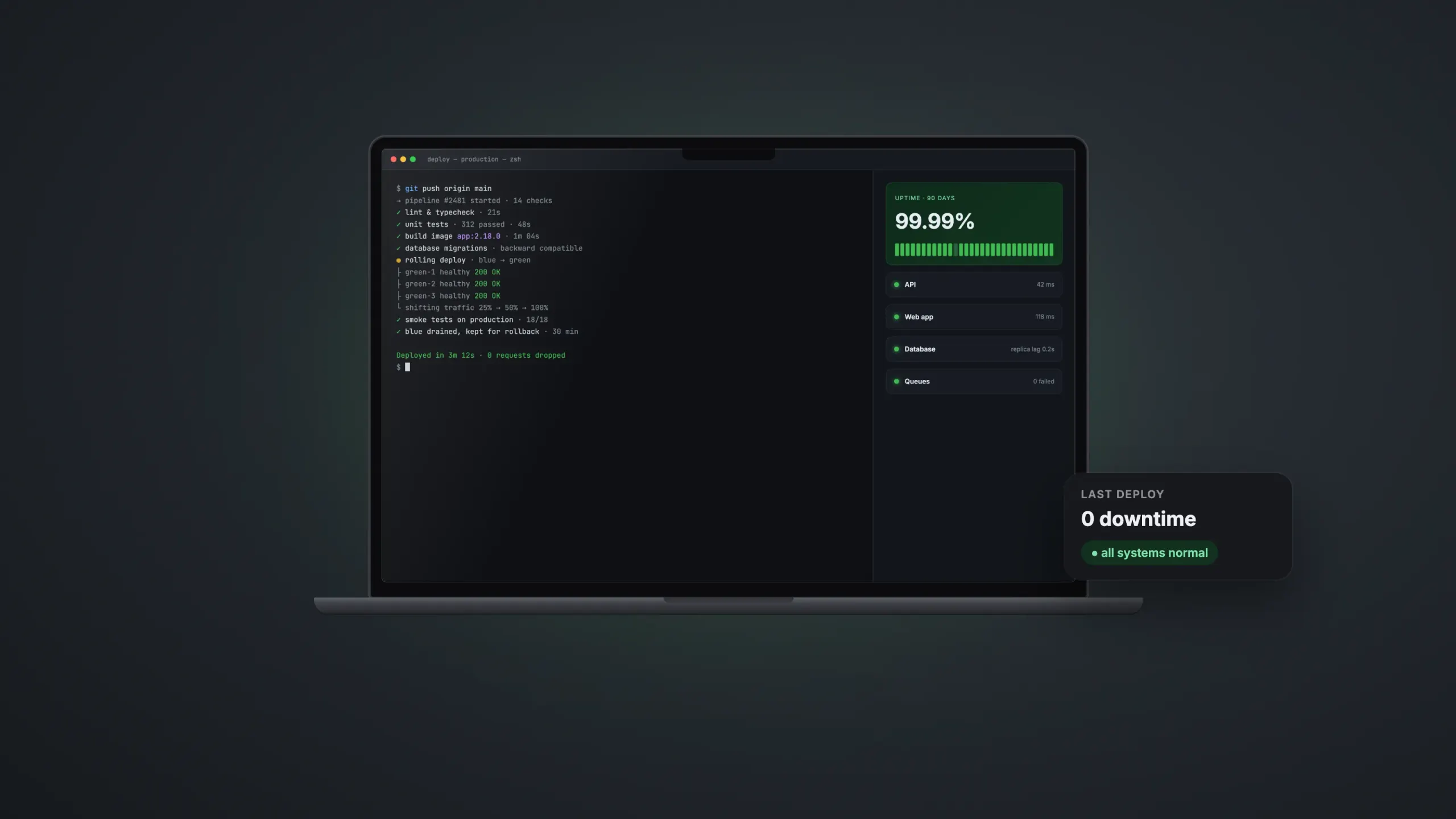
"We’ll deal with DevOps later" is usually the sentence right before a 2am outage nobody catches until customers start complaining.
What DevOps actually means in practice
It’s not a separate team you hire once you’re big — it’s a set of practices: automated deployments instead of manual ones, monitoring that alerts you before customers do, backups that are actually tested, and infrastructure that scales without a phone call at 3am.
The cost of skipping it
- Manual deployments mean human error — and human error during peak traffic means downtime
- No monitoring means you find out about outages from angry customers, not dashboards
- No staging environment means every deploy to production is a live experiment
What "good enough" DevOps looks like early on
You don’t need a platform team to get the basics right: a CI/CD pipeline (even a simple one), automated backups with a restore process you’ve actually tested, uptime monitoring with real alerts, and a staging environment that mirrors production closely enough to catch problems before they ship.
This is infrastructure work most founders never see happening — until the day it quietly saves them.
Have a similar idea?