Industry
Headless CMS vs. Traditional CMS: Which One Actually Fits Your Business?
WordPress isn’t dead, and headless isn’t automatically better. Here’s how to actually choose between them.
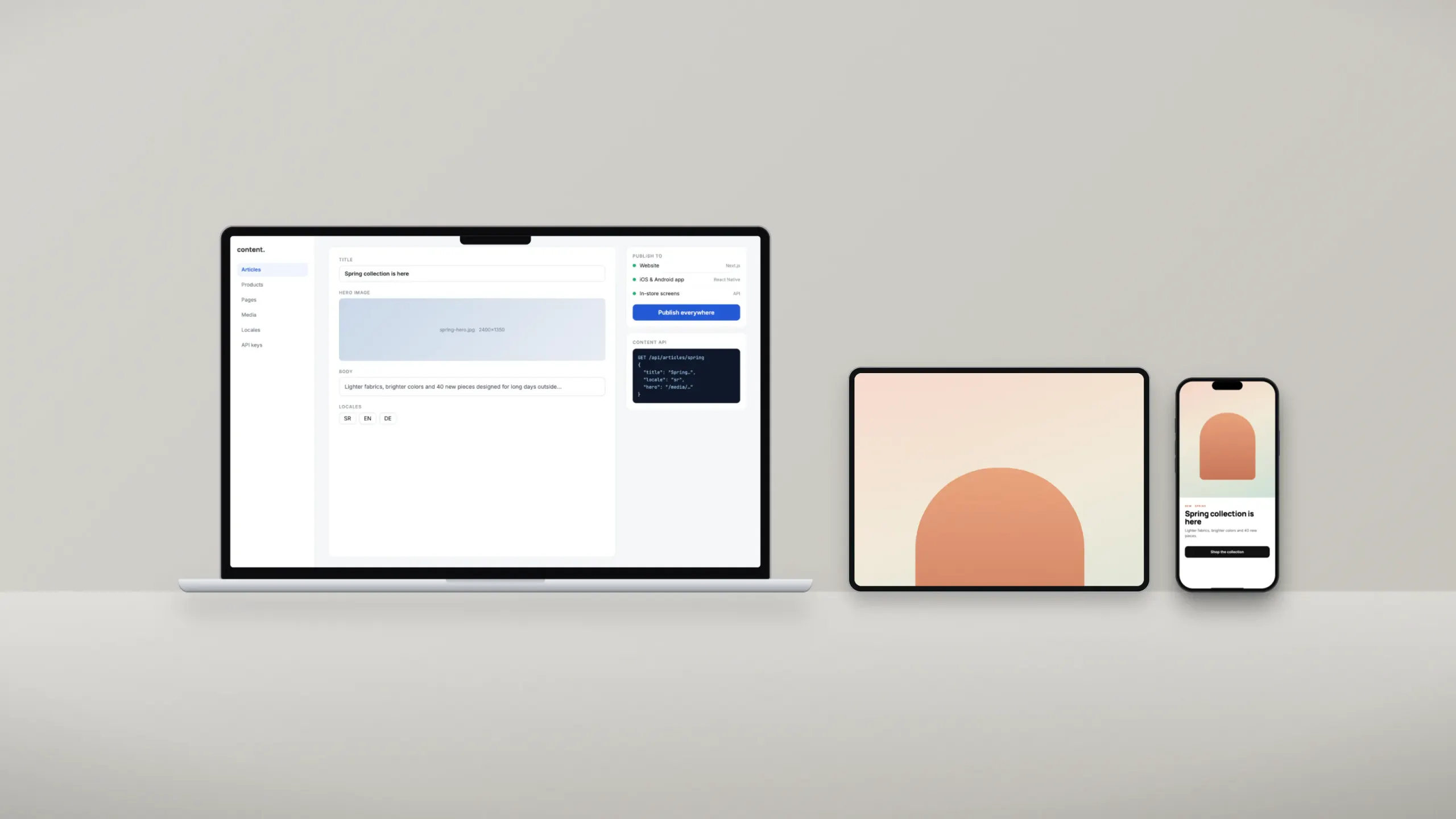
"Headless" became a buzzword fast, and buzzwords make bad architecture decisions. It’s not the right call for every project — or even most of them.
What "headless" actually means
A headless CMS decouples content from presentation — it stores and serves content through an API, while a separate frontend (like a Next.js app) decides how to render it. A traditional CMS, like standard WordPress, couples the two together.
When traditional CMS is the right call
- Content-heavy sites run day-to-day by non-technical marketing teams
- Budget-constrained projects that need to launch fast
- Sites where the plugin ecosystem — WooCommerce, SEO tools — matters more than squeezing out every last millisecond
When headless actually wins
When you need best-in-class Core Web Vitals performance, when content needs to power more than one channel (web, app, something else) from a single source, or when your design system genuinely can’t be expressed through a traditional theme.
What we actually recommend
Choose headless because you have a concrete requirement traditional can’t meet — not because it sounds modern. Most marketing sites are still better served by a well-built WordPress install, or a clean custom build, without the added operational complexity of running two systems.
We’ve shipped both — WordPress for consultancy and hospitality clients who manage their own content daily, and Next.js headless builds for products that needed real performance and custom UI.
Have a similar idea?